 admin
admin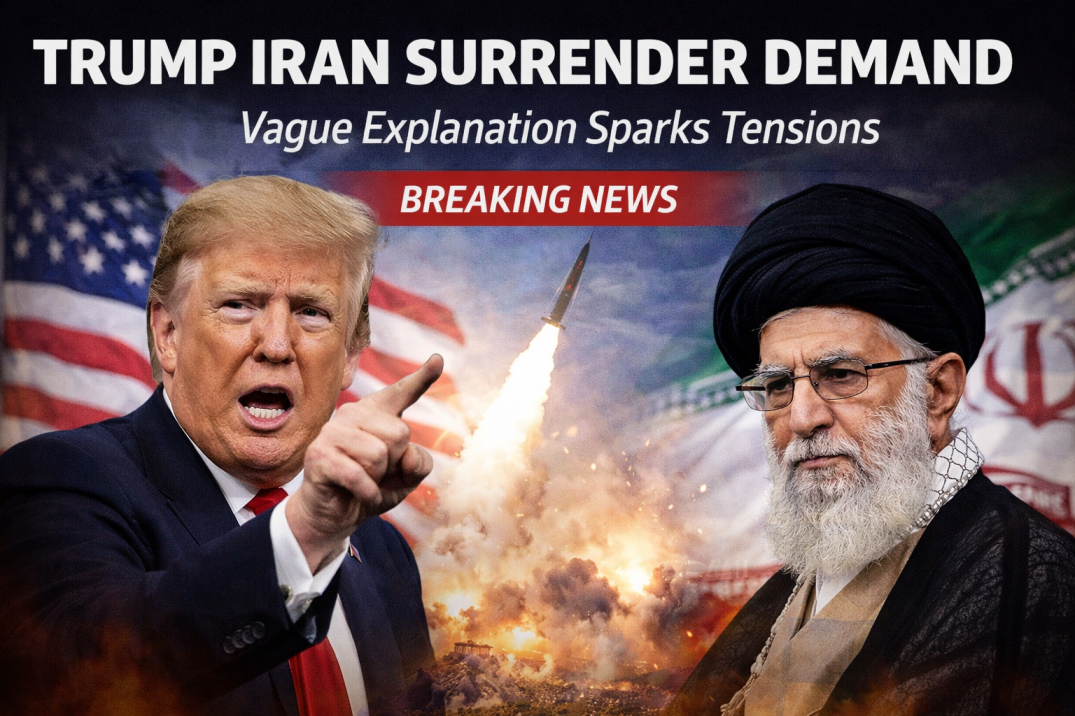
Trump Offers Vague Description of Iran Surrender Demand Amid Escalating Conflict
The ongoing tensions in the Middle East intensified after Donald Trump issued a call for Iran’s “unconditional surrender”, but provided only a vague explanation of what such a surrender would actually mean. The remarks came as the conflict between the United States, Israel, and Iran continues to escalate with airstrikes, retaliatory attacks, and growing international concern.
Trump’s comments have sparked debate among global leaders and analysts about the objectives of the war and the potential long-term impact on regional stability.
Trump’s Unclear Definition of “Unconditional Surrender”
While speaking to reporters aboard Air Force One, Trump claimed that Iran’s surrender would occur when the country could no longer continue fighting. However, he did not outline specific political or military conditions required for the war to end.
Trump suggested that surrender could simply mean the moment when Iran “can’t fight any longer,” leaving observers uncertain about the administration’s final goals in the conflict.
This lack of clarity has raised questions among diplomats and analysts about whether the United States is seeking regime change, military disarmament, or a broader restructuring of Iran’s leadership.
Possibility of US Ground Troops
Another major development is Trump’s refusal to rule out deploying American ground forces in Iran. He indicated that such troops could potentially be sent later in the conflict to secure enriched uranium stored at Iranian nuclear facilities previously targeted by airstrikes.
This possibility has alarmed observers who fear that a ground invasion could significantly escalate the war and draw more countries into the conflict.
Iran’s Response and Regional Impact
Iran has rejected the demand for surrender and signaled that it is prepared to continue fighting. Iranian officials have reportedly said the country could sustain a large-scale conflict for several months if necessary.
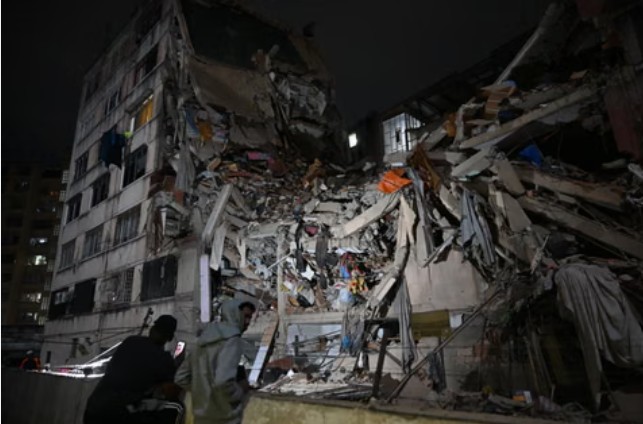
Meanwhile, the war has already caused widespread destruction and casualties across the region. Missile and drone strikes have targeted multiple areas in the Middle East, while retaliatory attacks have heightened tensions among neighboring countries.
The conflict has also drawn international criticism. Countries such as China have warned that the situation risks destabilizing the entire region and urged a return to diplomatic negotiations.
Global Concerns Over Escalation
As the war intensifies, global leaders are calling for restraint and dialogue. Analysts warn that prolonged military operations could disrupt global oil markets, increase geopolitical tensions, and worsen humanitarian conditions in the region.
The uncertainty surrounding the definition of “unconditional surrender” adds to concerns that the conflict could continue without a clear diplomatic pathway to peace.
Conclusion
Trump’s demand for Iran’s surrender has introduced a new and controversial phase in the Middle East crisis. With no clear conditions defined and the possibility of further military escalation, the situation remains highly volatile.
The coming weeks will likely determine whether diplomatic efforts can de-escalate the conflict or whether the war will expand further across the region.
👉 Stay connected with our website for the latest global news, geopolitical analysis, and real-time updates on the Middle East crisis.

 editor_nz