 editor_nz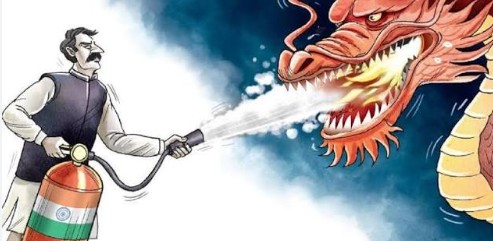
The story of this social media war in China vs. India, explained through the prism of the glamour v. the ‘reality file’. After a series of posts that displayed the futuristic infrastructure of China, it has become a curious debate on social media, with Indian users reacting in different ways. In recent times, several Chinese social media pages have posted impressively visual videos and images that showcase the country’s ultra-modern cities, dazzling skyscrapers, vast highways, and high-speed rail systems.
The images depicted China as a technological and urban wonder, captivating viewers from all over the world. But a lot of Indians took a contrary view. Since X (formerly Twitter), many users started posting pictures and videos about the other China that they have seen—older neighbourhoods, less developed areas, issues with cleanliness, and parts that are not as “cleaned”. Others discussed social inequality, rural-urban divide, and the ordinary people’s daily life struggles. The online back-and-forth quickly evolved into “social media vs social media,” as fans of each brand created some of the best images of the day. The discussion was quickly extended from comparing development between countries to comparing development between regions. Instead, it posed a larger question: Is there any country as real as that captured by cinematic drones and viral videos?
Many Indian users said that with regard to China, as with every country in the world, there were several realities. One model has a polished face and an official story and is presented to the rest of the world, while another is almost unseen, outside the frame of the camera. The debate also generated a bit of humour. Some of the viewers made fun of China’s public relations team for its presentation, and a “Reality Editor” appeared to have gone on vacation. Meanwhile, a number of social media users cautioned against making generalisations from specific imagery or viral videos. They emphasised that high-tech urban centres and areas where development challenges remain are present in each and every country, including India.
They said the whole country cannot be judged by the individual pictures. The online exchange has emphasised a new fact of the online era: global competition is not the same as economic growth or geopolitical influence. More and more, it’s a matter of social media narrative control. Meanwhile, countries, institutions and individuals are leveraging digital platforms to influence audiences’ perception of reality, and audiences are reminded to look beneath the surface of what they see online, and to look for a fuller picture before making judgments. As the episode concludes, a question remains for both the viewers and those who use social media: Are the 100 viral posts the whole story about a country, or is it just a partial story that leaves out the nuances?