 Zania-Editor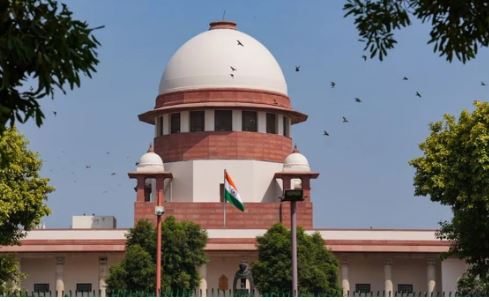
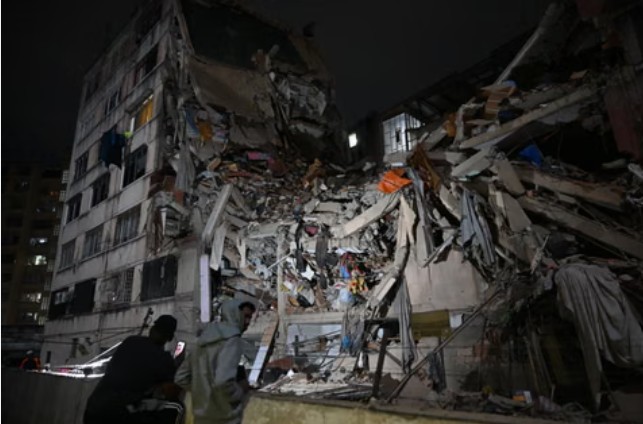
The Supreme Court of India addressed the issue of “bulldozer justice” during hearings on petitions challenging the recent practice of demolishing properties belonging to individuals accused of crimes. The court stated that public safety is a top priority and ordered the removal of any religious structures that encroach on roads, water bodies, or railway tracks. Justices B.R. Gavai and K.V. Viswanathan emphasized that the law must apply equally to all citizens, regardless of their religion.
During the proceedings, Solicitor General Tushar Mehta, representing states like Uttar Pradesh, Gujarat, and Madhya Pradesh, clarified that being accused of a crime does not justify demolishing properties without proper notice. He stated that even serious accusations, such as rape or terrorism, do not warrant such actions.
Justice Gavai pointed out the need for compliance with municipal laws and suggested creating an online portal for transparency regarding demolitions. Mehta expressed concern that the court’s directives might be seen as targeting specific communities, but the bench firmly rejected this idea, reinforcing the secular nature of the country. They made it clear that any obstructive religious structure, whether a temple, gurudwara, or dargah, must be removed.
The court stressed that laws against unauthorized construction should be uniformly enforced, irrespective of religious affiliations. Senior Advocate Vrinda Grover raised concerns about housing availability, to which Mehta responded that India’s courts can handle such issues independently.
In addressing the use of bulldozer actions as a form of punishment, Senior Advocate C.U. Singh highlighted that these actions should not serve as punitive measures. Mehta noted that while instances of targeting minorities may occur, they would be rare. The bench emphasized the scale of the problem, citing around 4.45 lakh demolitions overall.


 editor_nz